



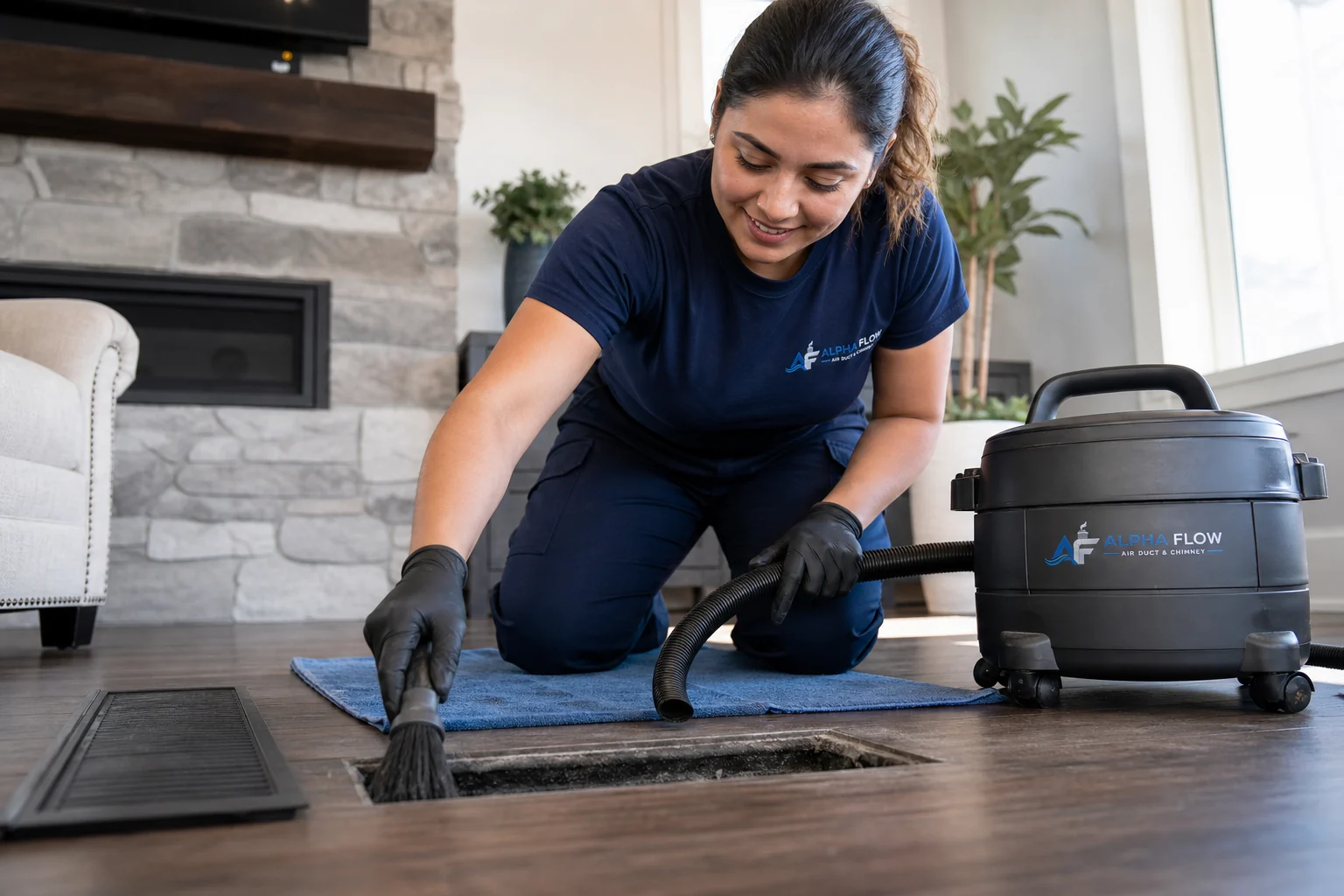

A practical guide to mold treatment for air ducts
Signs it may be time to
schedule a closer look.
The following observations commonly prompt homeowners and property managers to ask about mold treatment for air ducts. They are useful conversation starters rather than a self-diagnosis. If more than one appears at the same time, include that information in your call or text because the pattern may help us route the appointment appropriately.
- Visible growth-like material recurs
- Condensation is persistent
- The system had a water event
- Musty odor follows HVAC operation
Waiting is not always an emergency, but delay can make the original condition harder to interpret. Dust may redistribute, water may travel, loose material may fall away and a dryer or HVAC symptom may change with weather or operating load. Taking a few photos and noting when the issue occurs gives the technician a better history.
If you are uncertain, call 469-890-1608. Describe what you can see, hear or smell without dismantling anything. We can explain whether mold treatment for air ducts, an inspection or another starting service makes more sense. You never need to climb onto a roof, open energized equipment or reach into a moving appliance to prepare for the conversation.
What is included in an
Alpha Flow visit.
Access and material type influence every project, but the core expectations stay consistent. The technician explains the planned work zone, protects nearby finishes and uses equipment suited to the component being serviced. For this service, the main scope centers on accessible duct liner, metal duct, plenums and moisture-affected HVAC surfaces.
- Condition documentation
- Moisture-source review
- Material suitability check
- Scope and limitations in writing
You receive a measured plan that separates observation from testing and avoids unsupported health promises. If a hidden section, shared building component or specialized repair falls outside the visit, it is identified as a limitation. A precise explanation of what was reachable and completed is more useful than a long list of vague promises.
We also separate cleaning, evaluation and repair. Cleaning removes applicable buildup from the agreed accessible surfaces. Evaluation documents visible condition. Repair changes or restores a component. Sometimes a property needs only one of those actions; sometimes the correct order is inspection, source correction and then cleaning. Each step should earn its place in the scope.
Our Mold Treatment for Air Ducts
process.
Listen to the pattern
We ask what you noticed, how long it has been happening, the property type and any recent renovation, leak, appliance change or maintenance history that could matter.
Review access and condition
The technician evaluates the reachable parts of accessible duct liner, metal duct, plenums and moisture-affected HVAC surfaces, confirms the work boundary and identifies surfaces or components that need special protection.
Prepare the work area
Flooring, furnishings and nearby equipment are protected as appropriate. Collection, containment and access tools are positioned before material is disturbed.
Complete the agreed scope
We document visible conditions, identify likely moisture contributors and define cleaning or treatment only for suitable accessible surfaces. Work progresses deliberately, with the method adjusted to the construction, buildup and safe access available at the property.
Walk through the result
We review relevant photos, explain what changed and distinguish a current priority from routine maintenance or an optional improvement.

Talk with a coordinator before you book.
Share the ZIP code and what you are noticing. We will help confirm whether mold treatment for air ducts is the right starting service.
Why professional technique
matters.
Home systems are connected. An aggressive brush that is appropriate for one duct or flue material may be wrong for another. An overly wet treatment may put moisture near electronics or porous surfaces. A sealant that stops water briefly may redirect it behind a roof or masonry joint. Professional mold treatment for air ducts is valuable because the method should respond to the material and the whole pathway—not just the easiest surface to reach.
Containment matters for the same reason. The service should not trade material inside a vent, chimney or dryer route for dust and debris across the living space. Alpha Flow plans collection before agitation. That includes closing or isolating openings when appropriate, using controlled vacuum equipment and protecting the area where tools enter the system.
Documentation is the final part of technique. A homeowner cannot reasonably approve additional work based only on a technical phrase or a dark screen held several feet away. We connect findings to labeled photos and plain language. When a condition needs a specialist outside our scope, that is useful information too.
Most importantly, a technician should be willing to explain uncertainty. Access may be limited. A symptom may have more than one possible cause. Material may require testing by another professional. Honest limits protect the homeowner from unnecessary treatment and help the next qualified trade start with better information.
Dallas–Fort Worth
property considerations.
North Texas properties experience intense summer heat, wind-driven storms, long cooling seasons and fast changes between dry and wet conditions. Those factors can influence exterior masonry, roof transitions, attic routes and the amount of time HVAC systems operate. They do not create the same issue in every home, but they shape how we think about access, materials and maintenance intervals.
Housing across the Metroplex also varies widely. A newer townhome may have long concealed dryer runs and compact mechanical access. A mid-century house may contain additions, mixed duct materials or prior chimney repairs. A commercial building may require zone-by-zone scheduling and work outside occupied hours. Alpha Flow uses the property layout to plan mold treatment for air ducts rather than treating every address as an identical system.
Our service area extends approximately 60 miles from Dallas for route planning. Address, traffic, project type and technician availability affect the schedule, so the fastest way to confirm coverage is to text the ZIP code and service request. We serve individual homeowners, buyers and sellers, property managers, associations and commercial operators.
Preparing for your
appointment.
You do not need to clean the system or buy special materials before the visit. Clear ordinary personal items away from the primary access point, secure pets and let us know about parking, gate codes, roof restrictions or building-management procedures. If the symptom is intermittent, photos or a short note about timing can be helpful.
For any combustion, dryer or HVAC service, do not operate equipment if you believe there is an immediate fire, gas, carbon-monoxide or electrical hazard. Leave the area when appropriate and contact emergency services or the relevant utility. Alpha Flow’s scheduling line is for routine and urgent home-service coordination, not emergency response.
After the service:
use the evidence.
After mold treatment for air ducts, keep the completion information with your property records. Photos and notes help establish a maintenance baseline, especially after a move, remodel or repair. If conditions return, the time between service and recurrence can point toward an unresolved moisture source, route design issue, occupancy pattern or equipment problem.
Maintenance timing should follow use and condition rather than a universal sales calendar. A high-use commercial dryer route, frequently used fireplace or active construction site can need attention sooner than a lightly used residential system. Alpha Flow will recommend a practical review point based on the property without presenting every interval as an emergency.
Mold Treatment for Air Ducts
frequently asked questions.
What does professional mold treatment for air ducts include?+
The exact scope depends on access and condition, but Alpha Flow begins with a visual review, protects the work area and focuses on accessible duct liner, metal duct, plenums and moisture-affected HVAC surfaces. The planned service includes condition documentation, moisture-source review, material suitability check, scope and limitations in writing. If the technician sees a separate defect or an area that cannot be accessed, that limitation is explained before the scope changes.
How do I know whether I need mold treatment for air ducts?+
Common starting points include visible growth-like material recurs, condensation is persistent, the system had a water event, musty odor follows hvac operation. Those signs do not prove a single diagnosis, which is why the visit begins with observation rather than an automatic repair recommendation. Call or text what you are seeing and we can help you choose the most appropriate first appointment.
How long does mold treatment for air ducts take?+
Timing changes with system size, route length, access, buildup and whether multiple components are included. A straightforward residential visit may be completed in one appointment, while commercial, multifamily or repair projects may need additional planning. Alpha Flow confirms the expected service window when the scope is scheduled.
Will you show me what the technician found?+
Yes, when access and site conditions allow. The Alpha Flow process uses photos and a final walkthrough to make the findings easier to understand. The goal is to connect every recommendation to an observed condition rather than relying on vague technical language or fear-based claims.
Do you serve areas outside the city of Dallas?+
Yes. Alpha Flow schedules mold treatment for air ducts throughout Dallas–Fort Worth and surrounding communities within an approximately 60-mile planning radius of Dallas. Exact availability depends on the address, service type and route. Send the ZIP code in the request form or call 469-890-1608 for confirmation.
Can I get an estimate before approving additional work?+
Yes. The initial service and any proposed additional work are treated as separate decisions. If conditions suggest a repair, treatment or broader cleaning, the technician explains the reason, the proposed boundary and the next step so you can make an informed choice.